If you have a b2b app or website or service, then this guide is for you. I wont pretend this guide will 100% answer all your questions, but it will give you an idea of the stuff that you can do. I spent the past 16 years grinding agency and apps work to discover and refine thee, and i am still not the best on the market, but still I do quite well.
This guide is golden btw.
B2B buyers don’t impulse-buy. Before a company signs up for your software or hires your agency, someone there has probably googled the problem, asked ChatGPT for recommendations, read a comparison page, watched a YouTube walkthrough and checked who’s behind the product on LinkedIn or X.
That research takes weeks, and you want to show up at every step of it.
I once got a customer after 9 months of back and forth emails and discussions. They do they their time when it comes to big decisions. Some people research for 1 year or so for $100k or more projects.
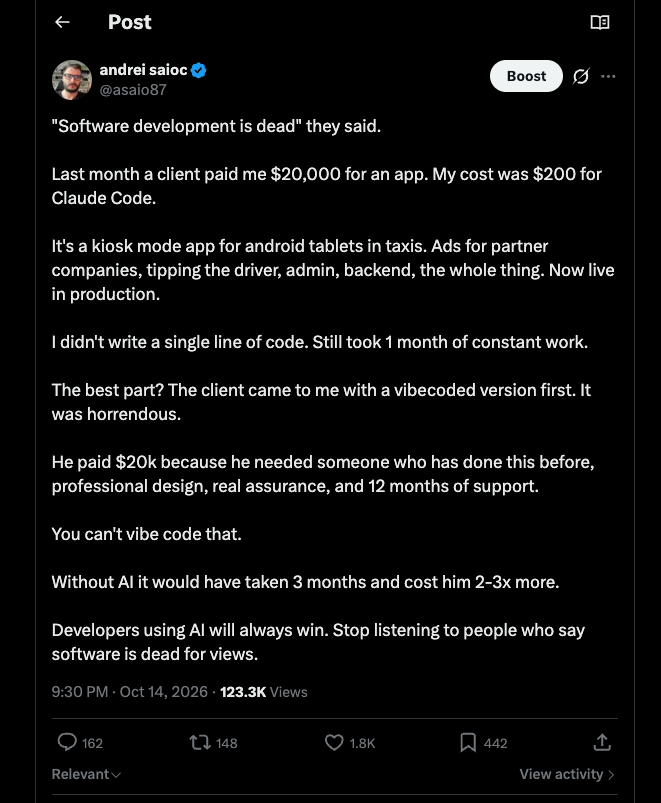
But there are cases when you get a project in a week, because recently got a b2b project for my agency in under a week, and it was 20k USD project, developing an MVP for a taxi company. The customer was desperate to go live, he had a deadline, and I delivered in time (30 days)
Most B2B founders skip all of that and go straight to ads. Then they burn a few thousand dollars, get a handful of demo calls that go nowhere, and decide marketing doesn’t work for them. Here’s the order I’d do it in instead.
The rule: no ads until you can comfortably spend $10K a month
B2B clicks are expensive, sales cycles are long, and one deal can take dozens of touchpoints. With $1,000 a month you buy a small pile of clicks, maybe a lead or two, and nowhere near enough data to know what’s working. You’ll stop the campaign right before it would have taught you anything.
So my rule is simple. Don’t touch paid ads until you have at least $10K a month to spend on them, and you’re comfortable losing it while you test. Until then, every dollar and hour goes into channels that compound: SEO, GEO, social media and YouTube. These keep working after you stop paying, and they make your ads cheaper later because people already know your name.
1. SEO: start at the bottom of the funnel
The mistake I see constantly is a B2B startup publishing “What is project management?” as its first blog post. Thousands of people search that, and almost none of them are buying anything. Start with the pages people read when they’re already close to a decision.
Here’s the order I’d build them in:
- Use-case and industry pages. “[Your product] for law firms,” “invoice automation for agencies.” One page per audience you serve, each speaking to that audience’s specific problems.
- Alternative pages. “[Competitor] alternatives.” People searching this are unhappy with a tool they already pay for, which makes them the warmest traffic you’ll ever get.
- Comparison pages. “[You] vs [competitor].” Be honest, including where the competitor wins. Buyers trust you more for it, and AI assistants are more likely to quote a fair comparison.
- Listicles. “Best [category] tools for [audience],” with yourself on the list next to real competitors.
- Integration and pricing pages. “[Your product] + Salesforce,” “[category] pricing explained.” Short pages, high intent.
- Directory listings. G2, Capterra, Product Hunt, AlternativeTo and niche directories in your industry. They bring backlinks, reviews and a second place to be found.
Then be patient. Most of these pages take three to six months to rank. They also keep bringing in buyers for years.
2. GEO: get recommended by ChatGPT, Claude and Perplexity
GEO (generative engine optimization) is SEO for AI assistants. More and more B2B buyers start their research by asking an AI “what’s the best tool for X,” and the assistant answers by pulling from pages it trusts. You want to be in that answer.
Your bottom-of-the-funnel pages already help here, since listicles and comparisons get cited constantly. On top of them, add two kinds of content:
Top-of-the-funnel guides written for LLMs. Clear, factual answers to the questions your customers ask before they know you exist. Put the answer in the first paragraph, use real numbers, define terms plainly, and cover the topic completely. AI assistants favor pages that answer directly over pages that make you scroll through an intro about the history of spreadsheets.
Experience-based articles. This is the content nobody else can copy. Write about how you actually solved a problem your target customers have: what you tried, what broke, what the numbers were, what you’d do differently. “How we cut onboarding time from 2 weeks to 3 days for a 40-person agency” beats “10 tips for faster onboarding” every time, for readers and for AI. Generic advice is everywhere. First-hand experience is rare, so it gets cited.
AI assistants also lean on what other people say about you, so the directory listings, honest reviews on G2 and real discussions on Reddit and in industry communities all count toward GEO too.
3. Social media: founder-led, consistent and scheduled
In B2B, people buy from people. A founder posting real opinions on LinkedIn and X will outperform a company page posting product updates almost every time. My agency gets leads this way, and I’ve never pitched anyone in a post.
The workflow I use:
- Find the conversation your buyers are having this week, and join it with your own take.
- Collect your best-performing posts and a handful of trending ones in your niche.
- Have Claude write new posts in your voice, with your business mentioned subtly.
- Approve the good ones and schedule a full week at once.
- Check what worked, feed the winners back in, repeat.
I wrote up the full method in plain English and the automated n8n version, including the exact prompt.
For scheduling, I use SchedPilot, which I built. You connect LinkedIn, X and your other accounts once, then schedule a week of posts across all of them from one calendar. It also has an MCP connector, so you can write posts with Claude and schedule them in the same chat, and an API on every plan if you want to automate the whole thing. Plans start at $21 a month billed yearly, with a 7-day free trial.
One more tip: every experience-based article you write is a week of social posts waiting to happen, and every post that takes off is an article idea. Run SEO and social as one machine, not two.
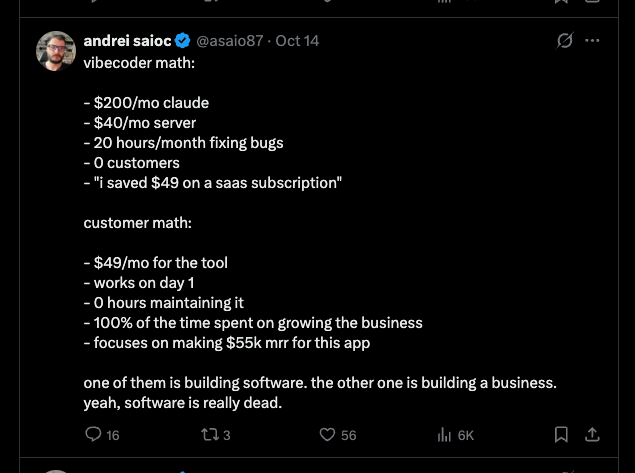
Here are some of my social media posts, and I advertise my services.
4. YouTube long-form: rank where buyers do their homework
YouTube is the second-biggest search engine, and B2B buyers use it to see what a product actually looks like before booking a call. Long-form videos (10 to 25 minutes) rank on YouTube, show up in Google results, and their transcripts get picked up by AI assistants too.
Make videos that match your bottom-of-the-funnel pages: full product walkthroughs, “[you] vs [competitor]” comparisons, “how to [solve problem] step by step,” and case studies with real customers. Use the same keyword in the video title as in the matching article, and embed the video in the article. Each one helps the other rank.
Then cut each long video into three or four short clips and schedule them to LinkedIn, X, YouTube Shorts and anywhere else you post. One recording becomes a month of content.
What a normal week looks like
You don’t need a marketing team for this. A realistic routine for a founder or small team:
- Monday: generate and schedule the week’s social posts (about an hour).
- Tuesday to Wednesday: write one SEO page, alternating between a bottom-of-the-funnel page and an experience-based or top-of-the-funnel article.
- Every other Thursday: record one long-form YouTube video.
- Friday: 30 minutes in communities answering questions, and a quick look at what performed.
Keep this up for six months and you’ll have a few dozen pages ranking, a library of videos, an audience on social, and a brand AI assistants recognize. That’s when ads start to make sense, because you’ll have the budget, the data and the reputation to make them work.
Another example of a recent social media post that did well, and I advertised my agency:
FAQ
How long does B2B marketing take to show results?
Social media can bring conversations within weeks if you post consistently. SEO and GEO usually take three to six months before pages bring steady traffic, and YouTube is similar. The upside is that all of it keeps working once it does.
Why wait for a $10K monthly budget before running ads?
Because B2B clicks are expensive and deals take many touchpoints, small budgets don’t generate enough data to learn from. You end up switching campaigns off before they could ever work. With $10K a month you can test properly, and if losing it would hurt the business, you’re not ready yet.
Should I start with SEO or social media?
Both, in parallel. Social brings early feedback and conversations while your SEO pages are still waiting to rank. If you can only do one at first, start with bottom-of-the-funnel SEO pages, since those bring buyers rather than browsers.
What’s the difference between SEO and GEO?
SEO gets you ranked in Google’s search results. GEO gets you mentioned when someone asks ChatGPT, Claude or Perplexity for a recommendation. The good news is they reward mostly the same things: clear, useful, first-hand content and a good reputation across the web.
Can I use AI to write my content?
Yes, for drafts, as long as the ideas and experience are yours. AI is great at turning your notes, past posts and stories into polished drafts in your voice. It can’t invent the lessons you learned solving a customer’s problem, and that’s the part that makes content rank and convert.
LinkedIn or X for B2B?
LinkedIn if you sell to established companies and decision-makers. X if your buyers are founders, developers or tech-forward teams. Most B2B businesses do well posting to both, which is easy when you write once and schedule to both from the same tool.
Do I need to be on YouTube?
If your product needs explaining or a demo, yes. Long-form videos rank for years and do a lot of selling before a prospect ever talks to you. Start with one walkthrough and one comparison video.
Need help with your marketing?
If you’d rather have someone set this up and run it for you, that’s what my agency does: SEO, GEO, social media and AI-powered workflows for B2B apps and service businesses. Call me, email me at andreisaioc@gmail.com, or find me on X at @asaio87. But if you straight up need b2b services then I am your guy as well.