TL;DR
A social media strategy is a one-page answer to five questions: what business number should social move, who are you talking to, which two platforms, what will you post, and how will you know it worked. Most strategies fail at the first and last question. They set “grow our following” as the goal and then report likes. This guide walks through nine steps, with a template at the end you can copy into a doc this afternoon.
The 9 steps
- Tie every goal to a business number
- Audit what you already have
- Work out who you are talking to
- Study three competitors
- Pick two platforms
- Set content pillars and formats
- Build a calendar and a workflow
- Reply, engage, and pay to boost what already works
- Measure ROI and review every 90 days
The typical person now spends 18 hours and 36 minutes a week on social platforms, and there are 5.79 billion active accounts to spend them on (the sources are in my social media statistics roundup). So the audience is there. What most brands lack is a reason for being there beyond “everyone else is.”
I have written strategies for my own products and sat through a fair number of agency ones. The good ones were short. The bad ones were 40-slide decks with a SWOT analysis and no posting schedule. If your strategy can’t be explained to a new hire in ten minutes, it is a document, and nobody will follow it.
What a social media strategy is (and what it isn’t)
A strategy says what you are trying to achieve and what you will ignore. A plan says who posts what on Tuesday. You need both, but in that order. Teams that start with the calendar end up posting five times a week with no idea why, and they quit around week six when nothing has moved.
It is also a different thing from “being active.” Being active is a cost. A strategy is what makes that cost pay something back, whether that is brand awareness you can measure or revenue you can trace.
Step 1: tie every goal to a business number
Start from the business, then work backwards to social. If the company needs 40 more demo bookings a quarter, the social goal might be 400 visits a month to the demo page from LinkedIn. If a two-location Pilates studio needs to fill Tuesday mornings, the goal is trial-class sign-ups from Instagram, and follower count is irrelevant.
Most strategies cover two kinds of goals. Awareness goals are measured in reach, impressions, video views, branded search volume and share of voice against competitors. ROI goals are measured in clicks, leads, sales and cost per acquisition. Write one of each. Give each a number and a date: “reach 60,000 unique accounts a month on Instagram by March” is a goal, “increase brand awareness” is a wish.
Two goals is enough. I have never seen a small team hit five.
Step 2: audit what you already have
Before adding anything, list every account the brand owns, including the Pinterest page someone opened in 2021 and forgot. For each one, note followers, posts in the last 90 days, average engagement rate, and which three posts did best. Then look for the pattern in those top posts. It is usually obvious once they are side by side: they are all video, or all founder-led, or all answers to a customer question.
Native analytics will do for one or two accounts. Beyond that, a proper tool saves hours, and I have compared the main options in my social media analytics tools comparison and, for Instagram specifically, in Instagram analytics tools.
Also open your website analytics and check how much traffic and revenue social sends today. That number is your baseline. Without it, step nine is impossible.
Step 3: work out who you are talking to
Skip the persona with a stock photo and a cute name. What you need is narrower and more useful: the five questions customers ask before buying, the words they use when they ask, and where they go to ask them. Read your support inbox, sales call notes and reviews (yours and competitors’). Ten real customer sentences are worth more than a demographic table.
Age does matter for platform choice, though. Pew found nine in ten US teens use YouTube and 63% use TikTok, while Facebook’s teen audience dropped from 71% to 32% in under a decade. If your buyers are under 25 and you don’t make video, you are not reaching them.
Step 4: study three competitors
Pick three: a direct competitor, a bigger brand you admire, and one account from outside your industry that your audience clearly loves. For each, write down how often they post, which formats they use, what gets comments (as opposed to likes), and what they never talk about. The gaps are where you go.
A social media monitoring tool will track their mentions and yours over time, which gives you share of voice, one of the few honest awareness metrics. An hour with a spreadsheet works too.
Step 5: pick two platforms
This is the position I will defend hardest in this article. Almost every business under 20 employees should run two platforms properly and ignore the rest. At least 98.8% of any platform’s users also use another one, and the average person visits 6.5 platforms a month. Being on six networks buys you very little extra reach and multiplies the workload by three.
Choose the first by where your customers behave the way you need. Researching products: Pinterest or YouTube. B2B buying: LinkedIn. Local and visual: Instagram. Under 25: TikTok. Choose the second by what you can repurpose with the least effort, for example Reels to TikTok, or LinkedIn posts to X. If you want the longer version of this argument, I ranked the networks in social platforms ranked worst to best and described each one in social media platforms brands should know.
Claim your handle everywhere else, put a link to your active accounts in the bio, and leave.
Step 6: set content pillars and formats
Pillars are the three to five topics you will be known for. For that Pilates studio: technique tips, member stories, instructor personality, class schedule and offers. Everything you post should fit one. When an idea doesn’t fit, it is either a sign you need a new pillar or (more often) a sign the idea is off-strategy.
Then decide the mix. A ratio I keep coming back to is four posts that teach or entertain for every one that sells. People quote 80/20 for this and the exact split doesn’t matter. What matters is that a stranger scrolling your last nine posts finds something useful before they find a discount code.
Formats come last, and the platform mostly decides them. Short video carries reach on Instagram, TikTok and YouTube. Carousels and text posts do the work on LinkedIn. Pick two formats you can produce every week without hating your life, because consistency beats production value at this size.
A quick word on AI. Use it for first drafts, repurposing a blog post into six captions, and resizing ideas across formats. Don’t use it for the opinion. Feeds are full of posts that sound like nobody in particular, and the accounts growing right now are the ones with a recognisable person behind them.
Step 7: build a calendar and a workflow
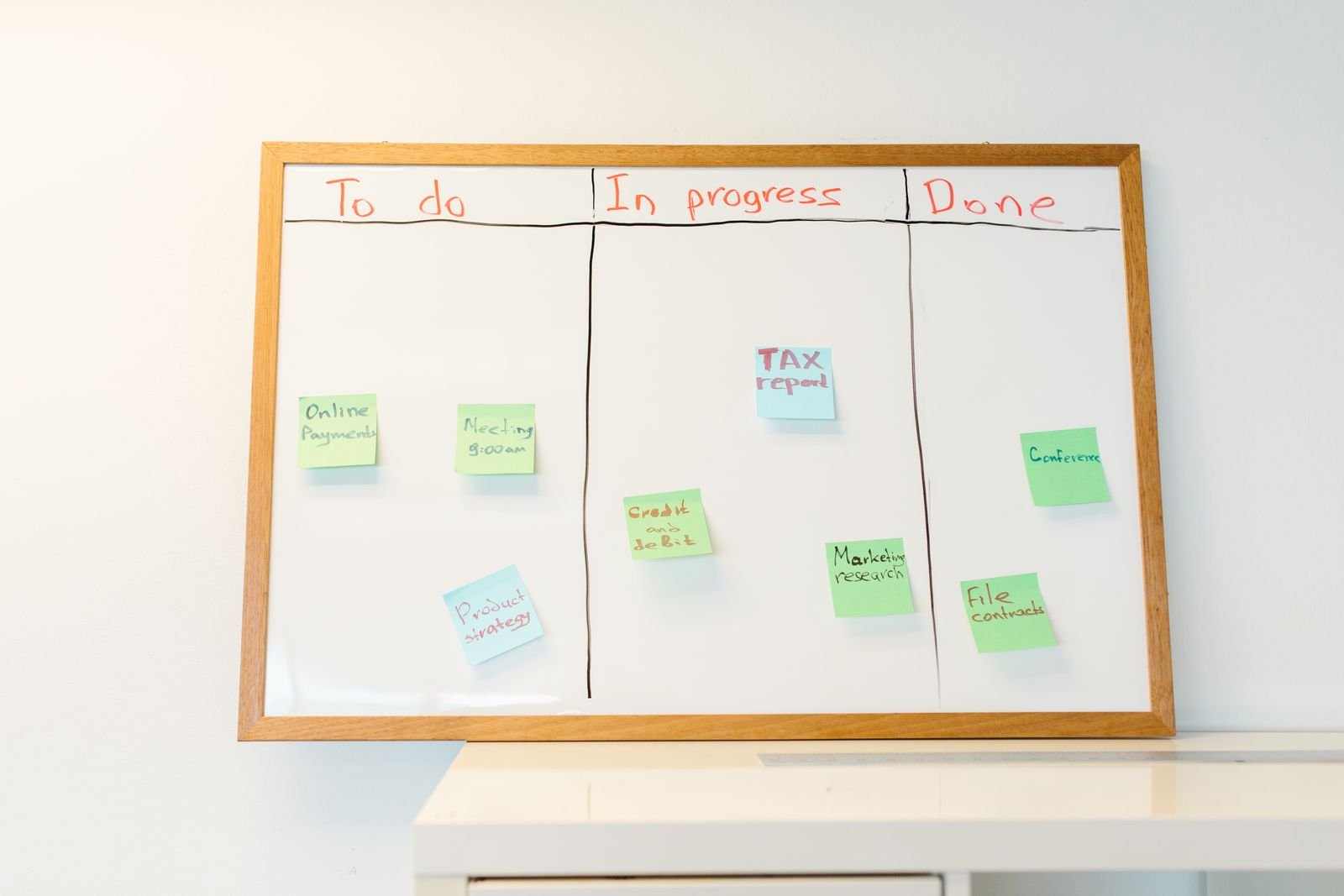
Now the plan. Set a frequency you can hold for six months. For most small teams that is three to five posts a week on the main platform and two to three on the second. Batch the work: one block for writing, one for design or filming, one for scheduling. I get more done in a single Monday morning of batching than in a week of posting when I remember.
Put everything in a calendar that actually publishes. I use SchedPilot because the calendar is the publishing queue and I can have Claude draft the week into it through the MCP server, but the specific tool matters less than having one. I compared the options in content calendar tools and social media scheduling tools, and if you are curious about the AI side, in MCP and social media.
Schedule against real timing data instead of 9:00 sharp on every post. I publish country-level numbers, for example the best time to post on Instagram in the UK. And write down the workflow in three lines: who drafts, who approves, who replies to comments. When that last one is unassigned, nobody does it.
Step 8: reply, engage, and pay to boost what already works
Publishing is half the job. Reply to every comment in the first hour if you can, answer DMs within a working day, and spend 15 minutes a day commenting on other accounts in your niche. It is tedious. It is also the cheapest reach available, since platforms reward posts that start conversations.
On paid: don’t start with ads. Wait until you have 30 days of organic posts, find the two that outperformed, and put a small budget (even $5 to $10 a day) behind those. You are paying to extend something the audience already voted for, which is a much safer bet than a brand-new ad creative. Set up the platform pixel and conversion events before you spend anything.
Step 9: measure ROI and review every 90 days
Put UTM parameters on every link you post. It takes 20 seconds per link and it is the difference between “social seems to help” and “LinkedIn sent 312 visits and 9 demo requests last month.”
The ROI formula is simple: (revenue from social minus cost of social) divided by cost of social. Cost includes tools, ad spend and the hours people put in, which is the part everyone forgets. If the studio spends $900 a month (tool, ads, ten hours of someone’s time) and social-attributed sign-ups bring in $2,700, ROI is 200%.
Brand awareness is harder to price, but you can still track it: monthly reach, branded search volume in Google Search Console, direct traffic, share of voice, and saves and shares (which say more than likes). I am honestly not sure anyone has a clean way to convert awareness into dollars. Track the trend, and don’t pretend to precision you don’t have.
Report monthly on one page. Review the whole strategy every 90 days: keep what worked, kill the weakest pillar or format, and test one new thing. Platforms change too fast for an annual plan.
A one-page social media strategy template
Copy this into a doc and fill it in. If it runs past one page, cut.
- Business goal: the number the company needs this quarter
- Social goals: one awareness goal and one ROI goal, each with a number and a date
- Audience: who they are, their five pre-purchase questions, in their words
- Platforms: primary and secondary, with one line on why
- Pillars: three to five topics
- Formats and frequency: for example 3 Reels and 1 carousel a week
- Workflow: who drafts, approves, replies, and which tool publishes
- Budget: tools, ads, hours
- KPIs: four at most, with the baseline from your audit
- Review date: 90 days from today
Mistakes I see most often
Too many platforms is the big one, and I covered it above. The second is reporting vanity metrics upward. If your boss or client hears “we got 1,200 likes” every month, social will be the first budget cut in a bad quarter. Report leads, sales, reach against target, and cost.
The third is quitting early. Organic social usually takes three to six months to show a trend, and most teams judge it at week five. Set that expectation in the strategy itself so nobody panics in month two.
Social media strategy FAQs
What are the steps to create a social media strategy?
Set goals tied to a business number, audit your current accounts, define your audience, study competitors, choose two platforms, set content pillars and formats, build a calendar and workflow, engage and boost what works, then measure ROI and review every 90 days.
How do you measure social media ROI?
Tag every link with UTM parameters, track conversions in your website analytics, and apply (revenue from social minus total cost) divided by total cost. Include tools, ad spend and staff hours in the cost.
How do you measure brand awareness on social media?
Track reach, impressions, video views, share of voice against competitors, branded search volume and direct website traffic. Watch the trend over months instead of individual posts.
How many platforms should a small business be on?
Two. Nearly all users of any platform also use others, so a strong presence on two large networks reaches most of your audience at a third of the workload of being everywhere.
How often should I post?
Three to five times a week on your main platform is a realistic target for a small team. Pick a frequency you can hold for six months, since a steady schedule does more than a burst followed by silence.
How long does a social media strategy take to work?
Expect three to six months for organic results to show a clear trend. Paid boosts on proven posts can bring traffic within days, but they stop when the budget stops.